——SUBMISSIONS ARE NOW CLOSED—— “Swing for the fences…Gut-shoot me and/or break my heart,
because, tonight, I just want to feel something.”
In the beginning, there was BORDERLAND NOIR, the ezine.
This autumn, Betimes Books
will be releasing BORDERLAND NOIR, the print anthology, a mix of old and new
stories and essays about life and death as lived along the Mexican border—about
dangerous crossings to build new lives that sometimes result in losing that old
life in every sense.
This new edition of BORDERLAND NOIR also provides the
opportunity to let in some fresh voices. More on that in a moment; first some
background on this project...about its birth in 2005 and its return in 2015.
An old quote from a crime novel: “Nobody cared if I died or
went to El Paso.” Raymond Chandler tossed off that line in The High Window.
Tom Russell,
the brilliant songwriter, essayist and painter who lives in El Paso—an artist
in every sense and one who also holds a master’s degree in
criminology—excerpted that nugget for the sleeve of his album Borderland.
James Crumley,
the godfather of the flavor of crime fiction I most revere, lifted the same
line from Chandler as an epigraph for his novel, The Mexican Tree Duck.
As I said, the dark heart of BORDERLAND NOIR, and its title,
go back many moons, to the waning days of 2005.
I had just completed drafts of two novels that were still a
few years from publication. The first was Head Games (2007), my
1950-era, Edgar Award-nominated debut about an aging novelist called Hector Lassiter and his trials
along the Mexican border after acquiring the long-missing skull of Pancho
Villa.
The second was El Gavilan(2011), a novel about illegal immigration and its stresses on a small Ohio
town. Games was written mostly from my imagination; El Gavilan was inspired
by things I was seeing and covering as an Ohio-based journalist.
Back in 2005, before the economy went bust, it seemed as if
the border was, well, everywhere. Border stresses—and all the bloody baggage
tied to that invisible line—were very much on my mind as ought-five drew to a
close.
A few days after wrapping El Gavilan, I was invited by Dave Zeltserman to
guest-edit an edition of his distinguished but now long-gone e-zine, Hardluck
Stories.
I impulsively pitched a theme of stories set along the
border and sold Dave on going live with the collection on Cinco de Mayo, 2006.
I dubbed the collection BORDERLAND NOIR, partly in tribute
to Tom Russell’s album, as well as the brand of fiction I felt I was writing at
the time.
The term “borderland noir” has subsequently become a
publishing branding slogan and a slice of frequently-seen book reviewer
shorthand for typifying a certain sort of dark fiction set along the border.
With Mr. Zeltersman’s blessing, I wrote a solicitation pitch
for stories that was really a thinly disguised mission statement for my two
still-unpublished novels.
It went like this:
"La frontera … what El Paso-based songwriter Tom
Russell describes as 'that delicious, dark-eyed myth of the border.'
"We’re headed way out west, out past where you’ve dared
to go before. Out to Touch of Evil country (that’s the film, not the
book, hombres).
"Our troubadours are Russell, Dave Alvin … Marty
Robbins and Ry Cooder. Mariachi bands dominate the shortwave radios down this
way, where tortured widower Orson Welles hands out justice with his ham-sized
fists, all the while muttering under his boxy Stetson.
"We’re not looking to be slavish about the coordinates:
The Border is a state of mind every bit as much as it is a geographic boundary.
But fiction or nonfiction, I will be seeking that Malcolm Lowry/Day of the
Dead/Cinco de Mayo vibe.
"Focus on that uneasy friction between Old Meh-hi-co and El
Norte … because, way down deep, we all know that you can leave
Brownsville, but you can never get Matamoros out of your soul.
"Give me stories about young lives snuffed out chasing
the dream of more money and better futures up north.
"Show me guilt-stricken 'coyotes' who can no longer
stand to roast peasants in locked freight cars, or to abandon babies and their
too-young mothers in the scrub-oak purgatory of the Sonoran desert.
"Tell me tales of Narcotrafficante madmen with too much
cash and bent imaginations who build crazy tunnels under miles of wasteland to
smuggle drugs. I’m craving stories about bad bastards who kidnap tourists and
mail them back one-finger-at-a-time, seeking impossible-to-pay ransoms from
gringo wage-slaves whose one foreign vacation has gone so terribly south on
them.
"To this day, cherry boys with butterflies in their
bellies steal across the border to get laid … to drink rum at TJ’s infamous
'longest bar in the world' and to find out exactly what the hell a 'Donkey
Show' is. But sometimes things take a turn. Rum and tequila and first sex are a
treacherous mix. Show me how treacherous.
"Emiliano Zapata said, 'It’s better to die on your feet
than to live on your knees.' So, in that spirit, swing for the fences, amigos.
Give me strong and original voices. Gut-shoot me and/or break my heart,
because, tonight, I just want to feel something."
Well, we at last put that issue out on May 5, 2006.
The sucker took on a life of its own. The next year, Head
Games came out with its own borderland noir vibe and Touch of Evil aspects.
El Gavilan followed a time after. Ken's and Manuel's stories were promptly anthologized. One of the other participants, Sam Hawken, has gone on to a distinguished career penning whole novels that fit the description of borderland noir.
Betimes Books will bring BORDERLAND NOIR back this fall in
eBook and trade paperback editions.
At this writing, with another Cinco de Mayo looming, I'm
looking up the original contributors and trying to get them back on board—putting the old band back together—while
simultaneously seeking some fresh talent.
I'm very interested in adding in one or two new stories to the mix,
from really new voices. If you write fiction (or even nonfiction: this edition will
carry at least a couple of subject appropriate essays) — if you've read the original
solicitation pitch and think it's something you want to try—shoot me a line and
give me a sense of what you might have in mind for consideration.
The following never-before-seen
Tom Russell interview was conducted by email in October 2011 while he was on
the road, touring in support of his album Mesabi.
It was intended to appear in a third collection of author interviews, in
sequel to ART IN THE BLOOD and ROGUE MALES (the latter boasts an earlier Tom Russell interview). That third book didn’t happen (for myriad
reasons, I pulled the plug). The interview survives. Revisiting it for the
first time in several years, I’ll declare it here and now to be one of my
personal favorites of the exchanges with writers I’ve been privileged to
conduct.
Tom Russell has
a new double-album out called The Rose of Roscrae. (You can find my review here.) The following interview stands as a
deep-dive into Mr. Russell’s interests and thoughts on music, the writing life
and creative types of all stripes. Ladies and
gentlemen, I give you Mr. Tom Russell….
***
Q. Bob Dylan centers the title song of
your new album, Mesabi. You’ve
recorded several Bob Dylan covers, notably on Indians Cowboys Horses Dogs, a take on “John Wesley Harding,” as
well as a recent track from the Pat
Garrett & Billy the Kid soundtrack with Gretchen Peters. You do a
killer version of “Just Like Tom Thumb’s Blues.” You’ve never been bashful
about putting your heroes and inspirations at the center of various songs, but
Dylan seems to loom largest for you. What speaks most profoundly to you in Dylan’s
music or career?
A. First: his catalogue. Astounding in its depth and
profundity. Bob Dylan exploded folk song, or hell, exploded American popular song, and also did away
with the absolute necessity for poetry in this culture. At least for awhile. When I was a teenager I
absorbed three key records: Bringing It
All Back Home, Highway Sixty-One Revisited, and Blonde on Blonde.Dylan wrote and recorded all three in
an 18 month period, along with dozens of outtakes.That’s probably fifty incredible songs within less than two
years. It’s unimaginable now. I can only liken it to Van Gogh painting over
three hundred paintings in the space of one year. The impact of that never left
me. Then he kept re-inventing himself. It seems like most other songwriters have
been scared stiff, into silence, ever
since. Dozens of damn good writers from the early Dylan era just gave up, went
home or killed themselves.Ponder
all that if you will, and bring out the crucifix…the kid from the Mesabi Range.
Q.
The album closes with a bonus track of you and Lucinda Williams dueting on a
Dylan song. With the vast Dylan catalogue to draw on, why did you pick a Hard Rain’s a-Gonna Fall, for this particular album?
A. I was fooling around with it one day
and started finger-picking a version while reading the lyrics. It sounded like
a fresh take on the song. The song had much impact on me because it appeared on
Dylan’s second album and it was ahead of its time. He really didn’t write
apocalyptic poetry like this for two or three more records. So he was
channeling his future muse. I like the drone of the lyrics as they build into
Armageddon. The images seem to combine Steinbeck, T.S. Eliot, William Carlos
Williams, Allen Ginsberg, Carl Sandburg and Rimbaud.
Q.
In terms of Dylan and “the reputation,” it seems increasing numbers of buzzards
are circling these years. We let some rare novelists grow old without critical
fallout. A character actor here or there… Painters get to age gracefully. But
few others in the creative arts are granted the privilege to mature and remain
relevant. Maybe some percentage of critics would actually have preferred Dylan
to check out in 1966 when he spilled that Triumph Tiger near Woodstock. Is
Dylan’s greatest sin maybe living too long?
A. Buzzards. Of course. This is a heartless
culture full of journalist buzzards. Elvis was laughed into an early grave. The
Wall Street Journal did an incredibly cruel article about Dylan being too old
to play. No respect. But consider the fact that Dylan has been getting booed
throughout most of his career: for turning electric, for not writing more
protest songs, for being born-again
for awhile and preaching about it in song, for doing Victoria Secret ads, for
going to China…on and on. And finally for not dying young. Journalists would rather write his obituary, and then
the magazines could do the memorial issues and bla bla bla. I think the bottom
line is it’s intimidating to journalists and young songwriters to have this guy
still around performing and recording and writing. He set the bar way to high
and now they want to crucify him for it. His face should be on the fucking
hundred-dollar bill instead of some dead politician. Let’s give him the Noble
Prize and shut up.
Q.
At the other end of the spectrum, I recall watching you perform a few licks of
Amy Winehouse’s “Rehab” during a Columbus sound check a couple of years back.
Did that “live hard, die young and leave a beautiful corpse” siren’s song ever
threaten to reach you?
A. I always knew
my limits, so to speak. I love the discipline of writing too much to wipe it
away with dissipation. Though I’ve been in the alley a few times. My wife
Nadine keeps me out of the bars now. I paint away the nights. I think Amy’s
rehab song was the last great and honest song I’ve heard in ten years. Blunt
honesty and dark humor. I loved her. She was the real thing in the faux era of Lady Gaga.
Q.
Like you, and several other singer/songwriters, Dylan also paints (and has
recently drawn fire for that, too).
You’ve been painting for a number of years now. Hemingway claimed to learn
about writing about the natural world from studying the paintings of Cezanne.
Does your painting, in any way, feed or enrich the music, or does it run the
other direction?
A. I’ve always
seen a link between songs and paintings. More of a link than between songs and
poetry. It’s hard to describe. I think I spelled it out pretty good in the
introduction to my art book: Blue Horse/Red Desert.Painting and
songwriting enrich each other. For
certain. There’s a lot of magic involved. You throw paint on the canvas
until something magic happens, or until you take it too far and ruin the thing.
Same with songwriting. Like Picasso said, it’s better to leave your mind
outside the door of the studio…and let it all rock.
"Zapata" by Tom Russell
Q.
In Blue Horse, Red Desert, the new
book collecting many of your paintings, you quote Baudelaire: “Genius is but
childhood recovered at will.” Picasso said, “Every child is an artist. The
problem is how to remain an artist once he grows up.” How do you keep the adult
from getting in the way on the canvas or in the studio?
A. I never grew up. Still the idle day-dreamer.
I walk through the usual bullshit of adult life just like everyone else. You
have to eat and sleep and mow the lawn and all that. I outlined the problem in
the song The Pugilist at 59… the goal is to keep the passion going while
balancing it all against the paying of bills and dues and the painfully dull
bullshit of modern existence. I believe art, and the making of art, and even listening or seeing great
art….takes us out “out of time.” We don’t age when we are painting or singing
or digging good art.I know that
for a fact. The trick is to stay in that realm, or tent, as long as possible.
Head on down the rabbit hole with Alice in Wonderland. It’s no mystery to me
why a lot of painters live to an old age. Painting and singing are like
floating above the killing fields. It’s the avoidance of getting that “heart attack machine” strapped across
our backs…as Dylan might say.
"Peckinpah in Durango" by Tom Russell
Q. You’ve asserted, “It’s far healthier to be creative
than to be bored.” Have there been periods in your life when you were bored in
more than the usual sense?
A. There’s been
periods when I gave up on myself, and then boredom and depression knocked me
off base until I could find my footing again. I drove cab. I dried out in the
odd mental hospital. Briefly. When
the writing and painting and prose writing is going well I’m never bored.
Depression is kept at bay. That old snarling predator! I also love being out on
the road singing the songs and taking them to the people. That routine is good
for me. That old Shakespearean stage life. Art has saved my soul, brother.
Q.
The new DVD, Don’t Look Down, gives
some sense of life on the road. Maybe it’s apocryphal, but you hear these
stories of Willie Nelson touring nearly year round, then getting home and still sleeping on his tour bus parked
out in the yard in order to get a solid night’s sleep. Do you look forward to
touring? Is it hard for you to transition between the road and home?
A. I love the
road, though I’m not as much of a road-hound as Willie. I like the balance of
writing the songs and then taking them out on the road for a year or two, then
holing up to write a new album and paint new paintings. Work on a book. I think
every new record deserves two years of concerts and such. Then I’ve got to lay
back and figure the next move. I’m working on several books, so I need to be
home part time to keep them going. But I love hotels and the routine.
Q.
Your albums have always boasted strong thematic structures—the sum of the parts
amounting to a much larger, clearly carefully constructed work. Is it
frustrating to see the bigger work chopped up or diffused through the delivery
system of single shot sales of songs via iTunes and various other web outlets?
A. Naw. The
songs will survive being thrown up in the air. They are children who were
raised well. There’s something out there for everyone. I would hope each song
is strong enough to stand alone, outside of the album. But I also appreciate
those who still look for full records.
Q.
Do you see a viable future for albums as a format?
A. Yes. It will
never fully go away, but the question is more like…will there be any writers
around who can write ten or twelve decent songs to fill a new record? We’re not
creating great songwriters. We’re creating people painting ambient sound walls
of whine. We’re creating networkers when we should be encouraging
outsiders. But the old forms survive
on the edges. L.P.’s are coming back. As are cassettes! Dig it.
Q.
Let’s talk about what seems to me to be the two running thematic streams of
your latest album, Mesabi. First we
have Hollywood and what you term, “the Hollywood Skin Trade” — what others have
called “the Hollywood Death Trip.” The front end of Mesabi is populated by several Hollywood—particularly Disney
associated—screen icons. You grew up in Los Angeles. How did living in the
heart of the Hollywood machine affect your attitude to film?
A. We took it
all for granted back then. I mean we were virtually living in Disneyland. The theme park was just down the road and the
T.V. show came on every Sunday and man, those
cartoons. Scary and weird. Check out Pinocchio
again sometime. They take all the bad kids to an island where they grow donkey
ears and work in the mines! Frightening things. Then Jiminy Cricket sails into
the scene and saves the day…the voice of Ukulele Ike. Weird. Cartoons, and
movies and great characters who were also actors…we took that for granted.
These hugely unique people. Now actors are just somebody on the faces of those
glossy magazines when you stand in line in the supermarket. Empty mannequins.
Q.
Your line in “Farewell Never Never Land” about meeting former Disney child star
Bobby Driscoll when he was pretty far gone—does that refer to an actual
encounter you had with Driscoll? Are there other Hollywood-types you
encountered in your youth around L.A.?
A. I think I saw
Bobby one day outside the Topanga Canyon Market and he looked strung out. It
was a long way from Treasure Island,
for sure. Adios, Never Never Land. Scary. It formed my idea that there was a
difference between real life and movies. I also grew up near Lee Acre who
played “Rusty” on Rin Tin Tin.We
played baseball together. Jerry Mathers, who was The Beaver on “Leave it to
Beaver,” played football against us in high school. These people were just around. You saw them at the beach. You
saw them in school. They were just doing a gig like anyone else…until it turned
bad for them. When your voice changed you might not get those parts anymore and
they drop your contract and you have no other skills. The bottom ain’t too far
from the top in Never Never Land.
Q.
The actor and noir icon Sterling Hayden is another Hollywood casualty
spotlighted on Mesabi. You earlier
name-checked the “Viking God” in “Beautiful Trouble” on Love & Fear. Is it the actor, the troubled man, or the
later-in-his-career author you find yourself drawn to?
A. All of it. I remember seeing him on the
Johnny Carson show, where Sterling was broke and asking the audience for a free
apartment overlooking the Hudson River with a typewriter and a mattress. He was
going to write the big novel. He’d written two books already. Once you saw him
on TV and heard his voice you didn’t forget him. He was damaged yet fearless. That
was back when they smoked on T.V. And laid the talk out on the line. I also saw
a documentary on him in the 1960’s (which I can’t locate now) where someone
filmed him on a barge on a river in Europe. Sterling was living on it. He was chugging Johnny Walker and really laying his
life out on the line. I’m drawn to his no-bullshit character. You can see and
feel the rough edges on that face. He’d been on the frontlines and could tell
you what it was like.
Q.
The second theme of the album seems to be “the dark and bloody battleground”
that is present-day Mexico, particularly as seen from your vantage point via a
key U.S. border town. Was Juarez still relatively open when you first moved to
El Paso?
A. I used to
walk across the bridge to Juarez until about two years ago. I drank in the
bars, I went to the bullfights, and I filmed Mariachi’s in the market place.
Some of that you can see in our film Don’t
Look Down. Juarez was wide open then. All of that is gone. It’s been a war
zone for several years and a lot of the old bars have been bulldozed.
Q.
Can you talk about a couple of your last border crossings? I read somewhere
about you getting caught up in at least one exchange of gunfire at some point….
A. When I first
came here in 1997 I used to go over to the bullfights. Twice I just missed
being mowed down in a drug rubout. We could hear the machine gun fire as we
drove away in the cab. The taxi driver was ducking down and the bullets were
flying. Those were the incipient rumblings of the war…cartel’s fighting cartels
for all that American drug money. It didn’t dawn on us that it would escalate
into World War Three. Nine thousand people have been killed over there and more
than forty thousand in all of Mexico, and yet this country seems obsessed with
the Middle East.
Q.
You’ve said Juarez is now more like “Tombstone on methamphetamine.” Can you
foresee any return to normalcy on the border or deeper in the heart of Mexico?
A. It works this
way: we sell them the guns, they kill each other to control the business, and
then we buy the drugs. The cartels war against each other to make the millions
in profit from all of this.It’s
too much embedded in the economy over there to fully go away. If America legalized some drugs it would take the heat off, but that won’t happen. We’ve lost the war on drugs. Charles Bowden,
the writer, is really the authority on all of this.
Q.
The other night, in concert, you remarked that Mexico City is the center of
western culture. Can you elaborate a bit on that?
A. The Aztecs
were there. Mayans. The pyramids and temples and art. It’s the old land of the
bottom line. Then the Spanish rode through. The shrine of our Lady of Guadalupe
is there. Mexico City is the spiritual heart of our western and cowboy culture.
You could spend two weeks down there and not see all the pyramids and museums
and shrines, and eat at the great cafes. The largest bullring in the world is
there, and Frida Kahlo’s house and the murals of Diego Riviera. I could go on
and on. My sister, who is married to an Italian, is always going to Italy and
Rome, and I tell her she should visit the heart of our culture. But most
Americans don’t get the point. They think it’s too dangerous and third world down there.
Q.
In an age when the very act of reading and writing seems threatened by
technology, you strike me as one of contemporary music’s lonely and truly
voracious readers. On recent tracks you’ve riffed on everyone from T.S. Eliot
to Graham Greene to Raymond Carver to Ray Bradbury. You seem to continue to
cast a pretty wide net in your reading. Are you still mostly drawn to
nonfiction? How do you choose a book?
A. I'm educated
as a criminologist, so I used to be drawn to a lot of true crime things. But
there’s not a lot of it being written that’s decent. I love biography. I’m now
reading Hemingway’s Boat, which is quite good. I love the non-fiction
work of Joseph Mitchell and A.J. Liebling, and both used to write for the New Yorker. You can learn a hell of a
lot about New York and Paris and food, and writing,
by reading these two. And boxing, in
the case of Liebling. They had character and style. I choose a book now by
hearing about it or reading a review or getting a nod from somebody. Then I
read a few pages and if I’m not pissed-off that somebody is writing at me or showing off, then I
continue. If I reach a point where I don’t care or give a shit about the subject or character or what the writer is
trying to do, I put it down and move on. Life, in that sense, is too short to
tolerate writing you are not moved by.
Q.
On the subject of fiction writers, you told a journalist recently,
“Ninety-eight percent of writers are lying… Even in fiction, it goes a long way for me to
find a modern fiction writer that I believe.” Who are some of those modern
fiction writers you can take the ride with?
A. I recently
discovered Denis Johnson. Train Dreams.
Nobody Move. Jesus’ Son. Unbelievably good. I want to read more. He seems
to be able to hit to any field with plenty of strength: crime novel, historical
novel etc. It seems the worms haven’t
gotten to him. He lives off the grid,
as you told me, way up on the top of Idaho. I’m going back and reading some of
J.P.S. Brown’s western stuff because I visited him recently and he’s led a
fascinating life. I think Leonard Gardner’s Fat
City (an influence on Denis Johnson)
and Fante’s The Brotherhood of the Grape
are modern master works. Of sorts. I always go back and read the openings to
several Graham Greene novels like: The
Power and the Glory and The Heart of the Matter.
Q.
You spent a period of time in your earlier years trying your hand at writing
novels. You’re back at that task, working on your own timetable as you put it.
Can you talk a little about where you might be headed in terms of subject or
setting?
A. I’ve been
trying to work on a piece of fiction about life on the border, here in El Paso,
during the Mexican drug war. Sort of a fragmented cowboy novel about the last
frontier. Cowboys, Indians, and Mexicans, fighting it out on the great
Chihuahua desert.It’s amusing me.
My earlier crime novel Bloodsport
(published only in Norwegian) was recently released as a paperback in Norway. I
won’t pursue getting that out in English. Not yet. I’m also writing a regular
essay on western things for a magazine called Ranch and Reata, a very well done publication. When I have about
twenty or thirty of those I’ll collect them into a book. My take on the West.
Q.
In “Goodnight Juarez,” there’s a lament: “They even tore the bullring down.”
I’m pretty sure you’ve read Hemingway’s bullfighting tribute, Death in the Afternoon. Hem equated
bullfighting with the act of fiction writing. The bullfight is under pretty
strong fire, even in Spain. What lessons or value can still be drawn from
witnessing bullfighting in your estimation?
A. That’s dangerous to try and explain or justify. First of all, I think Death in the Afternoon is dated now. But
the last chapter, where Hemingway celebrates all the things he left out of the
book, is one of his strongest pieces of writing. He summons up the old Spain
which has been ruined by the transformation into the euro economy. It’s the
best travel writing on Spain ever composed or concocted. It’s all gone.
Secondly, to even discuss bullfighting or Torero
within the context of current culture is almost impossible. It can’t really be
defended, even Hemingway knew that. I find all the political correctness rather
absurd in comparison to factory farming and the world of horse racing, and
other pursuits. I grew up on the backside of the race track and, trust me, racing thoroughbreds are
treated a lot rougher than fighting bulls. Dozens and dozens of horses ruined
and killed every season. But the very idea of sticking swords into an animal
and such is alien now. Torero is an ancient art,
not a sport. It’s a ritual. To really get into the idea of what’s going on and
why, one would have to explore the duende
musings of the great Spanish poet Federico Garcia Lorca, and his writings have
been edited and politically corrected in online bios. Such bullshit. I wouldn’t defend the bullfight to anyone now. It’s
a cultish thing that you either get
or do not get….and you’ll spend too
many afternoons waiting for that one moment when the door opens and you see
something that will hook you forever. By the way, I’m not a huge Norman Mailer
fan, but the best piece of writing he did was an essay on bullfighting called El
Loco. Or “The Crazy One.” It’s worth seeking out because it goes a long
way in describing these matters of duende
in the ring. Mailer says the bullfight taught him “something about the mystery
of form.”
Q.
Your penned a memorable Hemingway piece about visiting his house in Cuba
several years ago. You’ve indicated you’re thinking of expanding that into some
kind of essay. What’s your strong impression of the Finca?
A. I was offered
a rare glimpse inside the house, if I coughed up a five dollar bribe, and so I
was able to walk into his bedroom and see the typewriter and the spot where he
wrote, standing up. The books on his shelves were well thumbed and the bottles
of scotch and vodka were still in the front room. It was all very moving. It
was the house of a writer.
Q.
What, if anything, do you most admire in Hemingway’s writing or life as an
artist?
Charles
Bukowski, who I corresponded with for many years, said something to me once: Hemingway is better when you’re young. I
suppose that’s partly true. Same could be said of Bukowski! We immerse
ourselves in writers like Hemingway, Steinbeck and Kerouac, when we are
younger, and get carried into their dream. They lived “full up.” Hell, it was
exciting to imagine how these people lived their lives. They were certainly characters in the truest sense. But then
we had to grow up and lead our own lives. I went back recently and read A Moveable Feast and loved it, even with
all of its meanness and back-stabbing. It’s wonderfully written.I think Hemingway changed the American
sentence, and all the airplane journalism parodies and put downs will not erase
his influence on writing culture. As with Kerouac… I think the drinking life
caught up with Hemingway. Rituals that worked when you were twenty sometimes
slap you down when you reach fifty. He turned into a parody of himself. The
funny thing about Hemingway (and Bob Dylan for that matter) is there have been
over a hundred books written on these guys. Positive and negative. These two
artists have left a huge mark on our culture and all the cheap
criticism and mockery doesn’t matter. Is anyone going to remember Max Eastman
or those critics who went after Hemingway?
Q.
Your previous album, Blood and
Candlesmoke, contained this beautiful song called “Guadalupe” I especially
admire and I think you’ve referenced as a song you’re particularly proud of. In
setting up the song in concert, you seem to take pains to make clear it
shouldn’t be construed as a religious statement on your part. I’ve seen
Kristofferson do a similar thing in past years when performing his song, “Why
Me?” Is “Guadalupe” a song you fear some have taken the wrong way in some
manner?
I don’t really
care, since the song has to stand on its own. And does. I just want people to know what moves me is the story and the spirit of the Mexican people in continuing to react to the story.
We all pursue our miracles wherever we can find them. And in some ways, for
some wild reason, Our Lady of Guadalupe has become one of my own angels. We all
need to pray at times and prayer has nothing to do with organized religion.
Prayer is found embedded within the pursuit of making art. And in the reaching
out for help and hope. No matter Who you’re
reaching out to.
Q.
So many of your albums contain songs with flashes of autobiography, but you
seem to have become more aggressive about putting yourself at center of your
albums, particularly since Hotwalker.
Is that a false sense on my part, or are you deliberately letting more of your
life into the music?
A. I’ve become
more at ease with digging deeper. I often quote an old Carl Perkins line: aman can run away for so long….until one day
he runs back into himself. I
was known for many years as a “storyteller” which seems to stand outside the
idea of writing your own personal saga. After ten or fifteen years of being
slaughtered in personal relationships, and clawing my way back up to the rim of
the canyon, I decided to write about it. What it’s like on the frontlines. I
think it really started with the record: Love
and Fear. Now I’m happily married, so maybe I have the balance I need to
get personal.
Q. The new DVD includes
some footage of your wedding to your wife, Nadine. Has marriage changed or affected
your songwriting in any way you’re conscious of?
A.
Yeah. I’m more confident to follow whatever path my muses and angels will lead
me. I also am able, finally, to approach the great American love song with a bit of confidence. I’ve written a number
of songs for her. She also runs our business interests which allows me to focus
on art and song. Meeting her has really saved me. She’s also got a Master’s in
psychology, so she is perfectly equipped to deal with the maestro.
Q.
You’ve said,
“Every Tom Russell record should harbor at least one song of hope or simple
love.” The album Mesabi, proper, ends
on an acoustic version of “Love Abides,” from The Man From God Knows Where. What brought you around to closing
out with a reprise of that particular song?
A. Nadine heard it a few years ago and told me I
should re-cut it, because it was a great song. I picked up a guitar in the
studio in Tucson, recently, and laid down a rough version. Just me and the
guitar. I was going to re-record it with a band, but Nadine said it was
perfect. It’s rough and to the point, like Dylan finishing a record with Dark Eyes. Him and his guitar. A voice
in the night. I think all these dark stories need a little light washed over
them. Like Churchill said: if you’re
going through hell, keep going. You’ll eventually find a place where love
abides.
Q. Your earlier
composition, “Roll the Credits,” and a new one, “The Road to Nowhere,” are
featured in the Monte Hellman film, of the same name. There was reportedly some
interest on the part of Hellman for you to act in the film. Were you tempted to
take that “star turn”? Why didn’t it happen?
A. I think that scene got cut from the script
when the budget ran out so they didn’t call me. I wasn’t that interested. I was
honored Monte would think of me, but I don’t need to stand around a film set
all day when I could be painting. I was really happy to write the music and
Monte has become a good friend.And he makes a killer Margarita.
Q. On the subject
of performing, you’ve often described yourself as the kid who was a dreamer and
one who lived in his head. Yet your stage persona is that of a man who is wry,
engaging, charming. Do you relish your time on stage, or are there still
butterflies?
A. I’m now more comfortable on stage than I am in
“real life.” It took forty years, but I relish it. As I said above, when you’re
really inside a song, performing it
truthfully, then real-time stops. I also like bringing the songs to a live
audience, because a lot of people don’t have the patience to dig into records
these days…you lead them through the songs, then a light bulb goes off in their
heads. Oh, I get it!
Q.
I believe you’re now living part-time in Switzerland. Is that having any effect
on your writing or painting in terms of voice or theme? Do you paint when
you’re in Switzerland, or is that strictly a while-in-Texas pursuit?
A. I’ve been
writing and painting in Switzerland. Same as El Paso. Two unique perspectives.
We live part time in a small, medieval, Swiss farm town and there’s an inn down
the road built in the 1600’s with a huge wine cellar and a beer garden. I fancy
I’ll sit out in that garden and write a few books. It’s like living in a dream.
I also think you have a more objective view on the American scene from the
perspective of Europe.
Q.
Any intimations you’re prepared to share about where you’re headed next
musically or in other fields of creative endeavor?
Q. I want to
finish up a film on the West I’ve been working on with Eric Temple. He put
together my DVD and has done some great work, including a film on Edward Abbey
called A Voice in the Wilderness. It
will be an edgy look at the Spanish-influenced West, and will have a soundtrack
of new and original songs. I also want to finish the border novel and keep
working on a book of essays, many of which have appeared in Ranch and Reata. And of course keep
painting. I’m working on a series of nudes called “White People,” and trying to
finish three paintings titled Juarez-Guernica.
Adios.
“Dammit Kid, once we
had a world you won’t ever be knowin’.”
—“The Last Running”
“There’s a time for sober introspection
And a time to cut the wild dogs loose.”
Many are declaring Tom Russell’s new and sprawling, fifty-two
track double album The Rose of Roscrae
to be his masterpiece—“a Ballad of the West” or, variously, a
Western/Folk/Americana opera.
Arguably—bear in mind this comes from an author who’s
written an entire novel or twoinspired
and informed by Russell’s music—the singer-songwriter has a half-dozen
masterpieces already at his back.
This time, Russell’s previous western albums (Cowboy Real, Songs of The West and more)
collide with Les Miserables and David
Milch’s Deadwood. The result is a
staggering feat of the imagination. No other living singer-songwriter even
contemplates making albums like this one.
And yet, we have been at least a little ways down this particular
road with Russell before, though never on quite this grand a scale.
Talking about this project when it was still a work in
progress, Russell often described it as the looming last-third of a triptych
that includes his landmark immigration saga The
Man From God KnowsWhere (1999), then
continues on through the largely spoken-word Hotwalker. (Released in 2005, chronologically
speaking, the 2Oth-Century centric Hotwalker
is the logical final installment of these three brilliantly idiosyncratic albums).
Tonally, structurally and with its strong sense of Irish culture
and music, at least superficially, Rose
hews much closer to The Man From God
Knows Where.
While the new album also boasts some great spoken word
pieces, The Rose of Roscrae is chockfull
of music in a way Hotwalker was not—you’ve
got plenty of great new tunes from Russell, interspersed with snippets of classic
Irish ballads and Western trail songs. There are plenty of terrific Russell
tracks deftly weaving between cameos from fellow singer-songwriters Johnny Cash,
Guy Clark and Gretchen Peters, among many others.
Call it aural montage or call it the soundtrack for a
Western that doesn’t but should exist, Roscrae
is largely carried on the troubled back of an Irish immigrant named Johnny
Dutton.
Our “hero” leaves Ireland at age sixteen in the late 1880s.
He roams western America, living a picaresque outlaw existence during the dying
days of the mythic Old West, “a jack of all trades and master of none,” with a
penchant for collecting other men’s sage words and spontaneously breaking into
song.
Dutton also acquires a longish list of outlaw nicknames and dabbles
in enough bare knuckles boxing to addle an already dodgy and drink-soaked brain.
All the while, he is seeking his fellow expatriate Irish inamorata, the titular
Rose of Roscrae.
The first disc (or “act”) focuses largely on the male side
of the story; disc two substantially shifts the point of view to a female
perspective.
Russell and co-producer Barry Walsh have unleashed a work
whose scope, ambition and giddy swagger stubbornly but winningly defy easy
summation.
So I’ll throw up my hands and focus on the words and the
music of a few choice cuts.
“The Rose of Roscrae” is a terrific Irish ballad that
succeeds in sounding like something that’s alwaysbeen there—a tune that has surely been
belted out by generations of well-oiled pub-crawlers between slurred renditions
of “Carrickfergus,” and “The Fields of Athenry.”
The melodyof
the rousing “Hair Trigger Heart,” evokes some of the feeling of “Human
Touch”-era Bruce Springsteen: “I’ve known love from every angle/I never learned
the art of the graceful getaway.”
He “Wasn’t A Bad Kid When He Was Sober” exuberantly dissects
the walleyed-romantic bullshit of the “misunderstood outlaw” mystique (think
Billy the Kid or Jesse James): “Racist, sexist, moved to Texas/passed a dozen
worthless checks/killed three men and made it across the border.”
The most beautiful of the Russell-penned songs on this new
collection is presented twice, sung from the male perspective (Russell) and the
female (the brilliant Maura O’Connell): “She Talks To God,” is an elegiac,
moving piece of songwriting that instantly enters the Russell pantheon
alongside his relatively recent and sublime “Guadalupe,” which is also sampled
on the second disc, sung by Gretchen Peters.
And that’s the
other thing about this one: Apart from being a widescreen reflection back on
the Old West—its culture, myth and legends—this double album also looks back on
Russell’s own long and impressive career, with numerous callbacks to earlier
recordings and snippets of countless prior Russell-penned songs and signature
covers.
Where Tom Russell goes from here is a compelling
befuddlement to me—this release seems to be a capstone and a summation of nearly
all that came before it.
In terms of those earlier mentioned spoken-word tracks, two
keep drawing me back for repeat plays. The first comes via the great David
Olney (he “covers the noir domain better that anyone,” as Russell rightly
claims). In the role of Dutton’s rueful sidekick, Judge Squig, Olney recites in
“The Sidekick’s Last Testament” an ill-considered “truth-to-power” epistle that
makes clear candor is too often dangerously overrated.
Closely following Olney’s tour-de-force is a terrific
monologue that Russell penned in inspiration from a John Graves’ short story set
to an elegant and aching tune by Chip Taylor and John Platania.
“The Last Running” tells of a ragtag collection of Comanches
who shame a last buffalo off a rancher for a final hunt. A younger witness to
this event, looking back over the years, confesses, “It’ stuck with me more
than most things I’ve witnessed and all that history I ever learned in school.”
In sum, I flat-out love
this latest Russell release: I also joyfully “ran down the rabbit hole” of its
accompanying paperback libretto/program guide that’s a work of folk culture and
songwriting archeology unto itself.
I’m pretty certain I’ll get at least one more
Russell-inspired novel out of this album—hell, may even three or four: it’s an
audacious achievement and one to be savored.
So, is this Tom Russell’s masterpiece? I’d say it’s
certainly one of them.
(Note: Russell closes
his paperback “program guide” with an afterword that is also a tribute to
Ernest Hemingway and the author’s classic chapter from his bullfighting tome, Death
in the Afternoon, in which Hem writes of
all the things he didn’t get to write about more formally in that book. A few
years back, I interviewed Mr. Russell for a never-released third collection of
author/songwriter interviews. Our talk was at points very Hemingway-centric.
This weekend, for the first time ever, and in celebration of Tom Russell’s new
album, I’ll share that interview from that un-published book.)
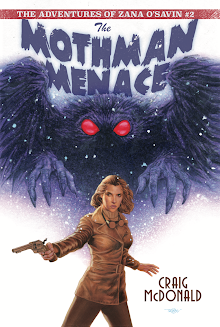
The Adventures of Zana O'Savin continue! Pulp fiction for our time in the spirit of Doc Savage, The Shadow & The Avenger.
THE BLOOD OGRE
Prolific pulp novel legends Lester Dent (Doc Savage) & Walter B. Gibson (The Shadow) both had the actual experience of witnessing their characters come to life, a chilling historical claim that sets the stage for this new series of neo-noir pulp adventures!
WRITE FROM WRONG
Hector Lassiter, Black Mask Magazine legend, crime novelist and screenwriter rubs shoulders with a who's who of 20th Century legends including Ernest Hemingway, Doc Savage creator Lester Dent, Walter B. Gibson of Shadow fame and Orson Wells.
HEAD GAMES, THE GRAPHIC NOVEL
A pulp-noir adaptation of the Edgar Award-nominated novel introducing Black Mask author, crime novelist and screenwriter Hector Lassiter.
Edgar®/Anthony/Macavity/Gumshoe/Crimespree nominated novelist of HEAD GAMES: THE GRAPHIC NOVEL, ONCE A WORLD, WRITE FROM WRONG, ONE TRUE SENTENCE, FOREVER'S JUST PRETEND, TOROS & TORSOS, THE GREAT PRETENDER, ROLL THE CREDITS, THE RUNNING KIND, HEAD GAMES, PRINT THE LEGEND, DEATH IN THE FACE, THREE CHORDS & THE TRUTH, EL GAVILAN, PARTS UNKNOWN, CARNIVAL NOIR, CABAL and ANGELS OF DARKNESS. Nonfiction titles include ART IN THE BLOOD and ROGUE MALES: CONVERSATIONS & CONFRONTATIONS ABOUT THE WRITING LIFE.
ONCE A WORLD — The acclaimed prequel to the Hector Lassiter series
Hector Lassiter's story begins, from his journey into Mexico to catch Pancho Villa, to the bloody trenches of World War I.
ONE TRUE SENTENCE (Hector Lassiter Series #1)
Hector Lassiter Series: #1 Bestseller, Amazon.com.au; One Of BookPeople's Top 10 Of 2011 & Poisoned Pen Staff Favorite. "Vivid, remarkable characters... Absolutely gripping!"—Diana Gabaldon
FOREVER'S JUST PRETEND (HECTOR LASSITER SERIES #2)
Hector Lassiter Series: #3 Bestseller, Amazon.com.au! "Entertaining...a must read for series fans &...for new readers."—Publishers Weekly
TOROS & TORSOS (HECTOR LASSITER SERIES #3)
Hector Lassiter Series: #4 Bestseller, Amazon.com.au! Named to numerous Year's Best Lists! "A bold, ambitious, genre-bending novel."—George Pelecanos
THE GREAT PRETENDER (HECTOR LASSITER SERIES #4)
Hector Lassiter Series: #2 Bestseller, Amazon.com.au! "McDonald cagily splits up the action, with Welles in full enfant terrible mode in the first half of the book—much of the story unfolds on the night of the infamous War of the Worlds broadcast in 1938—while the second takes place in the late 1940s as the filmmaker's star is already burning out."—Vince Keenan, author of DOWN THE HATCH
ROLL THE CREDITS (HECTOR LASSITER SERIES #5)
Hector Lassiter Series: #5 Bestseller, Amazon.com.au! "A writer of truly unique voice, approach, and ambition, Craig McDonald delivers again with ROLL THE CREDITS. Not to be missed." —Michael Koryta
THE RUNNING KIND (HECTOR LASSITER SERIES #6)
"Just the right amount of history, suspense, action and familiar faces to make his alternative history fascinating."—Terry Bowman, author of FIONA'S RULES
HEAD GAMES (HECTOR LASSITER SERIES #7)
Hector Lassiter series: Edgar & Anthony Awards Finalist! #5 Bestseller, Amazon.com.au! Coming autumn 2017 as a graphic novel from First Second! "Smart, it's funny, and it moves like a roach when the lights go on."—James Sallis
PRINT THE LEGEND (HECTOR LASSITER SERIES #8)
Named To More Than A Dozen Year's Best Lists; the most translated of the internationally best-selling series of novels! "An epic masterpiece.”—Michael Connelly.
DEATH IN THE FACE (HECTOR LASSITER SERIES #9)
The penultimate Hector Lassiter novel with 007-creator Ian Fleming; selected by The Rap Sheet as a 2015 novel of the year; praised by Publishers Weekly and Booklist!
THREE CHORDS & THE TRUTH (Hector Lassiter series #10)
The climax of the Hector Lassiter series, from Betimes Books. "With THREE CHORDS & THE TRUTH, Craig McDonald has crafted a remarkable coda to the series."—Steven Powell, author of JAMES ELLROY: DEMON DOG OF CRIME FICTION; "Grabs the reader by the throat." —Publishers Weekly. Get your copy here https://www.amazon.com/dp/B01N0D4UFX
BORDERLAND NOIR
Now Available from Betimes Books
EL GAVILAN
Starred Review From Publishers Weekly! PW Pick of the Week. "As sobering and as urgent as tomorrow's headlines."—Publishers Weekly
PARTS UNKNOWN (CHRIS LYON SERIES #1)
#1 in Chris Lyon series of eBook exclusive thrillers, now available
CARNIVAL NOIR (CHRIS LYON SERIES #2)
#2 in Chris Lyon series of eBook exclusive thrillers, now available.
CABAL (CHRIS LYON SERIES #3)
#3 in Chris Lyon series of eBook exclusive thrillers, now available.
ANGELS OF DARKNESS (CHRIS LYON SERIES #4)
#4 in Chris Lyon series of eBook exclusive thrillers, now available and featuring Hector Lassiter!




 Posts

